

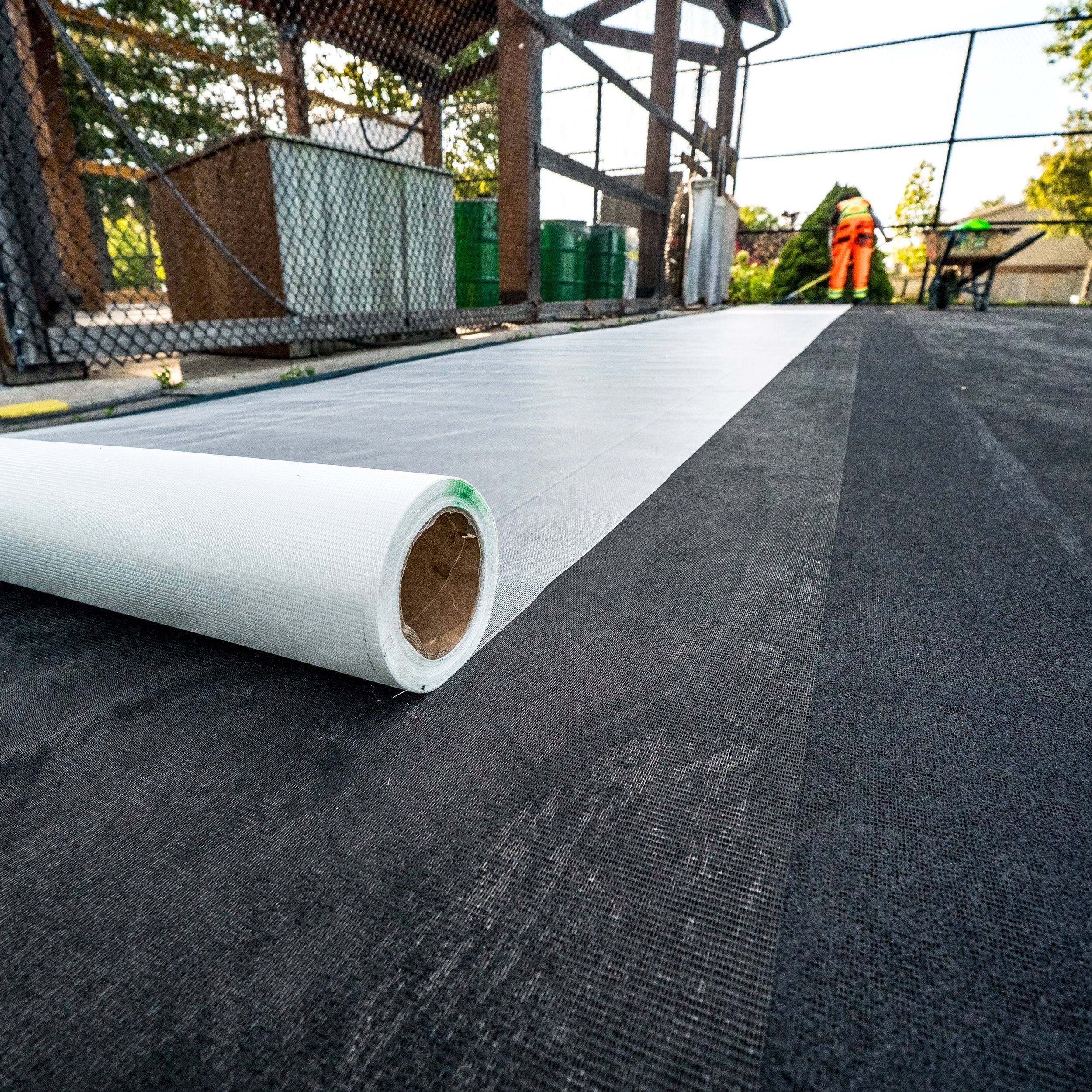
If you've noticed cracks forming in your acrylic tennis, pickleball, or basketball court, you're not alone. It's one of the most common issues homeowners and facilities run into with acrylic surfacing and honestly… it’s inevitable. The good news is that there is a way to prevent it prematurely. Here's what actually causes acrylic courts to crack, and how fiberglass mesh reinforcement can stop it from prematurely happening.
Why Do Acrylic Courts Crack?
Common causes of acrylic court cracking can be the freeze-thaw cycles causing the base to expand and contract, movement in the concrete or asphalt base, UV exposure, general wear breaking down the coating over time, or insufficient reinforcement during the original coating installation.
In Canada, freeze-thaw cycles are one of the biggest contributors to premature court cracking. As the coating repeatedly freezes and expands, it puts constant stress on the acrylic coating above it, eventually causing cracks.
What Is Fiberglass Mesh?
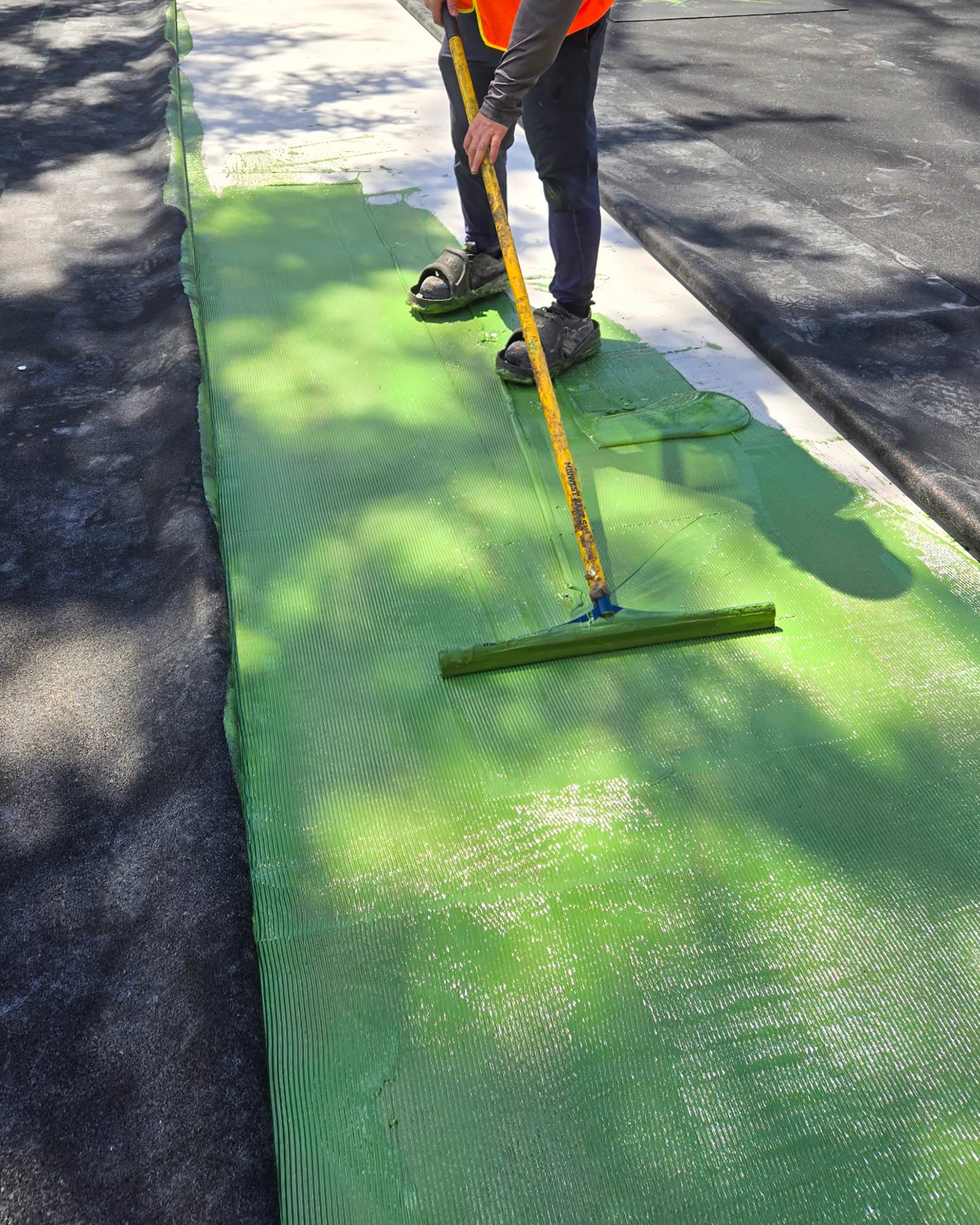
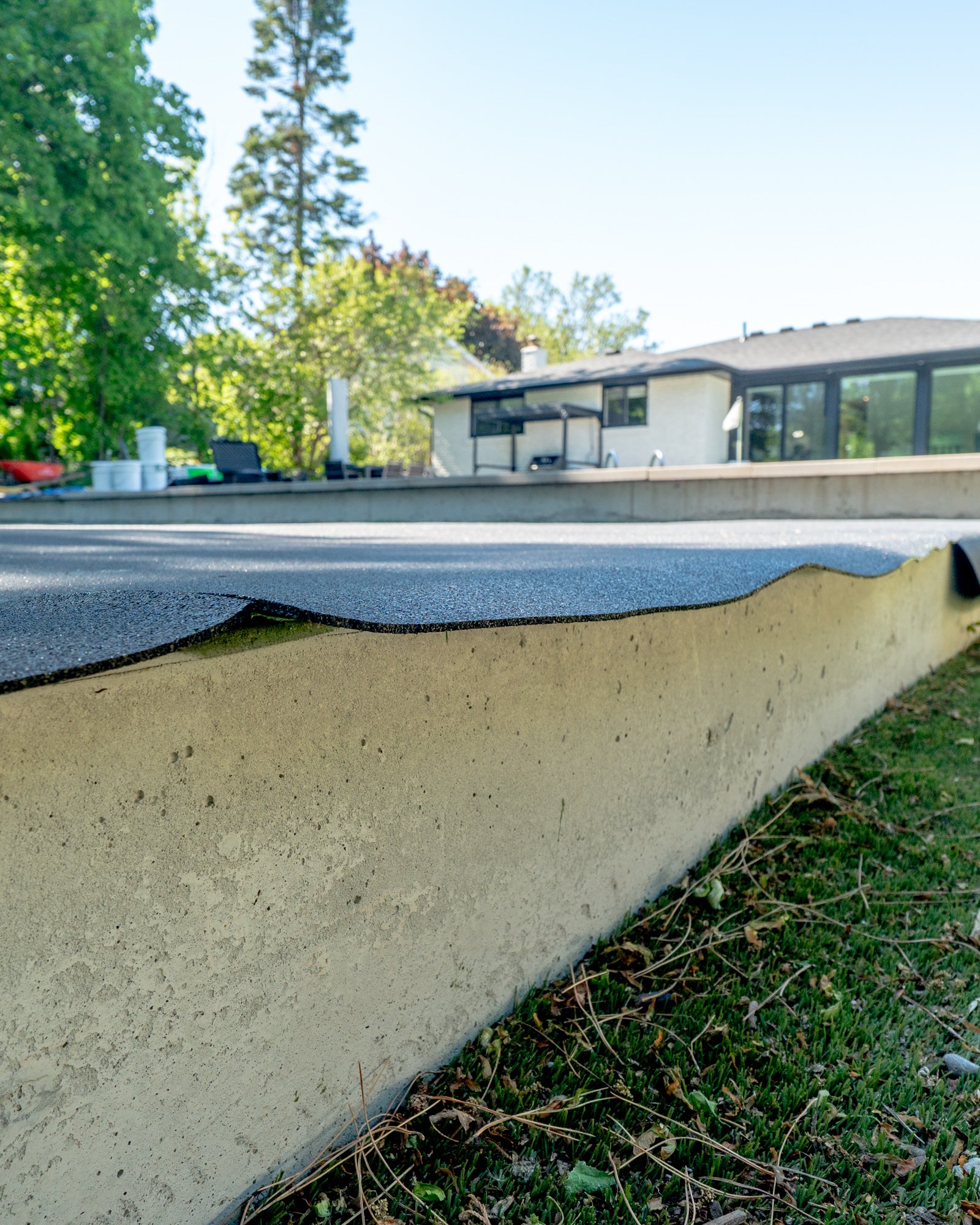
EIGHTYNINE Sports Fiberglass Mesh is a reinforcement membrane installed during the acrylic resurfacing process, designed specifically to prevent premature surface cracks and extend the life of your court.

Benefits of Fiberglass Mesh Reinforcement
-
Bonds seamlessly with acrylic resurfacer for superior adhesion
-
Adds structural stability and flexibility to the acrylic coating
-
Helps prevent base movement from reflecting through the surface
-
Suitable for both new acrylic surfaces and restoration projects
-
Efficient coverage, with rolls measuring 4' wide by up to 750' in length
For a standard 60' x 120' tennis court, only three rolls of fiberglass mesh are typically needed for full coverage, meaning fewer seams and a more consistent finished surface.
How Fiberglass Mesh Prevents Cracking
Rather than simply coating over an existing base, fiberglass mesh is installed as part of the acrylic resurfacer process, where it fully bonds with the coating rather than sitting as a separate layer. This gives the finished surface added flexibility and structural stability, allowing it to absorb minor base movement without transferring that stress directly into visible cracks. For courts in climates with significant freeze-thaw cycles, like most of Canada, this added reinforcement is one of the most effective ways to extend the life of an acrylic surface.
Treating Existing Cracks
If your court already has cracks, the right treatment depends on the size of the crack.
Small Cracks (1/16" or Less)
Small spider cracks can typically be cleaned, primed, and filled using acrylic resurfacer directly.
Larger Cracks
For cracks larger than 1/16", an acrylic deep patch (court patch binder) mix is used instead. This is mixed with Portland cement and sand, applied to fill the crack, and left to fully cure before being ground smooth and level with the rest of the surface.
In both cases, adding fiberglass mesh during the resurfacing process afterward can help prevent the same cracks from reappearing.
Built for Canadian Weather
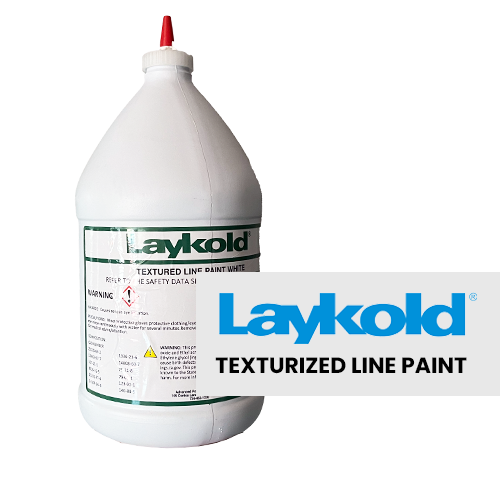
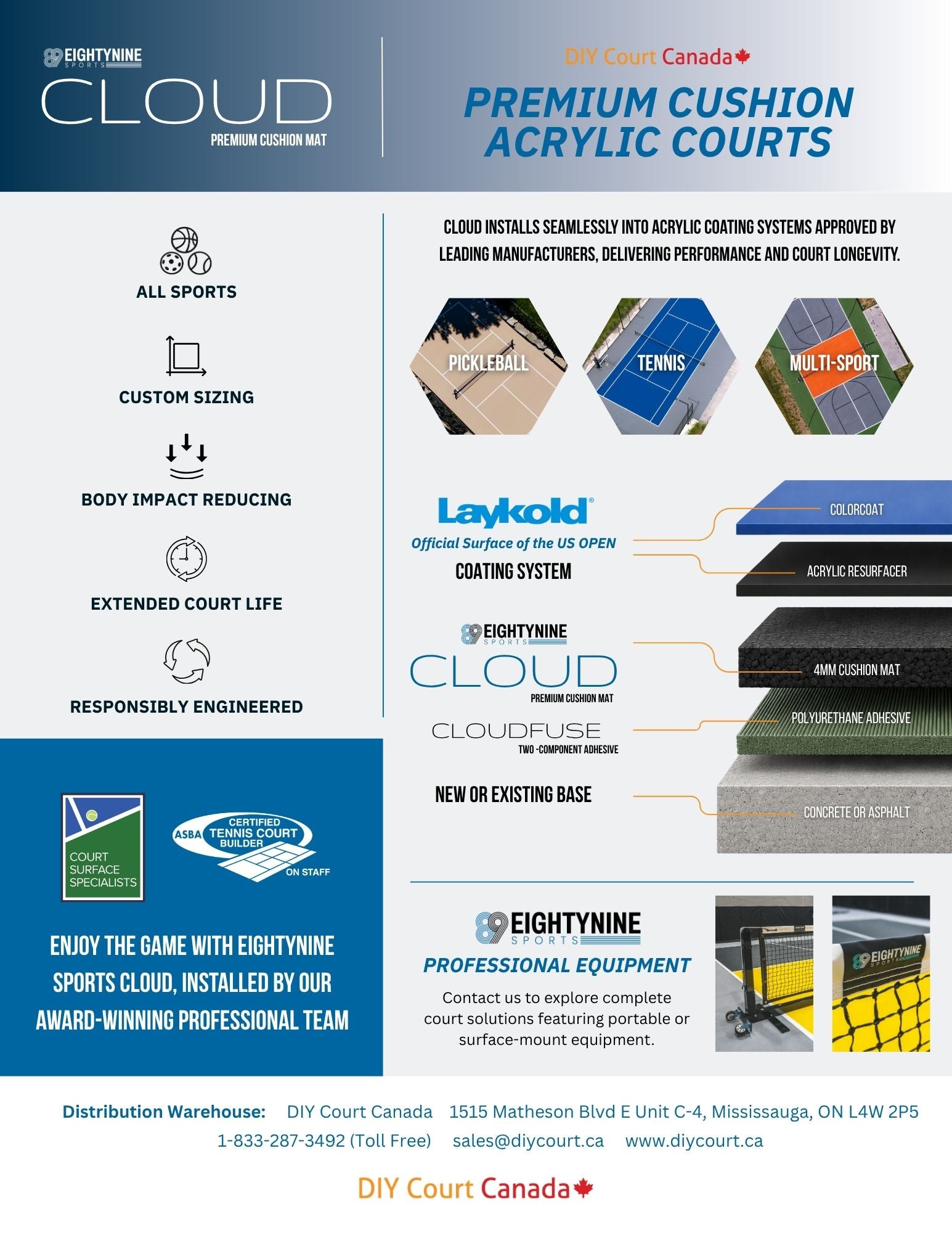
Because freeze-thaw cycles are such a significant factor in acrylic court cracking, reinforcement matters even more for Canadian courts than it does in warmer climates. Laykold acrylic surfacing, the official surface of the US Open, Miami Open, and Indian Wells, paired with fiberglass mesh reinforcement, gives Canadian courts a stronger defense against the seasonal freeze-thaw stress that causes most premature cracking.

Frequently Asked Questions
Can fiberglass mesh be added to an existing acrylic court? Yes. Fiberglass mesh is suitable for both new acrylic installations and restoration projects on existing courts.
How many rolls of fiberglass mesh do I need? A standard 60' x 120' tennis court typically requires no more than three rolls, since each roll covers a large area with fewer seams.
Will fiberglass mesh completely stop cracking? While no reinforcement can guarantee a surface will never crack, fiberglass mesh significantly reduces the likelihood of premature cracking by adding structural stability and flexibility to the acrylic coating.
Ready to Protect Your Court Surface?
Whether you're resurfacing an existing court or building a new one, DIY Court Canada can help you choose the right acrylic system and reinforcement for long-term durability.
Contact our team today to learn more about Laykold acrylic surfacing and fiberglass mesh reinforcement.










Share:
How Much Does a Backyard Court Cost in Canada?
How Many Pickleball Courts Fit on a Backyard Tennis Court?