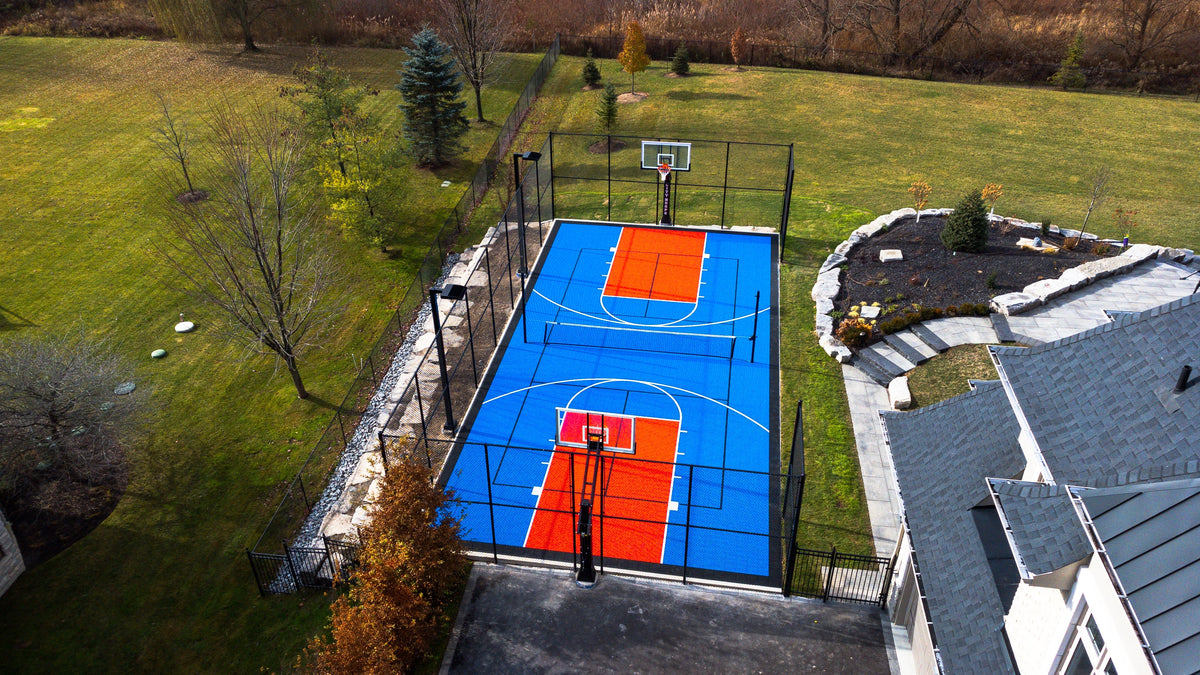
For most backyards, modular sport tile is generally considered the best all-around surface for an outdoor basketball court because it essentially has zero maintenance. It offers better shock absorption and traction than bare concrete or asphalt, drains well through rain and snowmelt, and holds up better to freeze-thaw cycles, without the crack risk that comes with a solid poured surface.

That said, the right surface for your court depends on your budget, priorities, and how you plan to use the space. Here's how the main options compare.
Comparing Outdoor Basketball Court Surfaces
|
Surface |
Traction |
Shock Absorption |
Maintenance |
|
Concrete |
Good |
Low |
Low, but may crack over time |
|
Asphalt |
Moderate |
Low |
Moderate, may need resealing |
|
Acrylic-coated |
Excellent |
Low to moderate |
Moderate, may need recoating |
|
Modular sport tile |
Excellent |
High |
Zero to low |
Concrete
Concrete is one of the most common outdoor basketball surfaces, largely because it's durable, relatively affordable to pour, and often can be constructed without heavy machinery.
Benefits of Concrete Long-lasting and structurally durable Widely available and easy to source installers for Provides a firm, consistent playing surface
Drawbacks of Concrete Very little shock absorption, which is harder on joints over time Prone to cracking as the ground shifts through freeze-thaw cycles Can become slippery when wet without additional coating Requires a properly graded surface, typically at least a 1% slope, to shed water; without it, puddles can form and linger after rain
Asphalt
Asphalt is another common choice, especially for larger driveway or full-court installations.
Benefits of Asphalt Generally less expensive than concrete Faster to install for larger areas
Drawbacks of Asphalt Can be difficult logistically, softens and can retain heat in direct summer sun Cracks and develops potholes over time, especially in colder climates Rougher texture that increases wear on shoes and skin during falls Like concrete, needs a properly graded 1% slope to drain water off the surface rather than allowing it to pool
Acrylic-Coated Surfaces
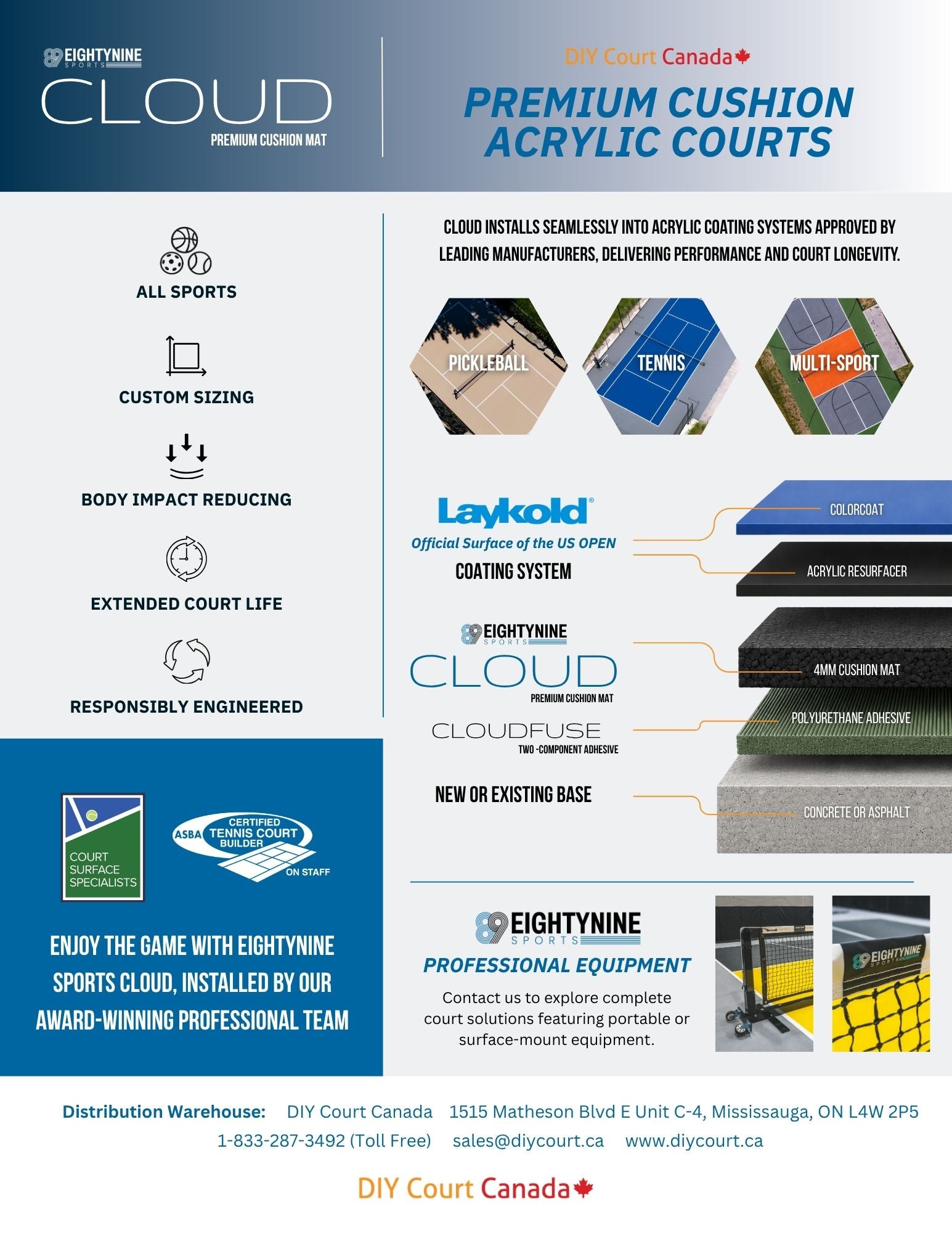
Acrylic coatings are applied over an existing concrete or asphalt base to create a smoother, more tournament-style playing surface.
Benefits of Acrylic Coating Smooth, professional-grade playing surface Available in a range of colours and line configurations Improves traction compared to bare concrete or asphalt
Drawbacks of Acrylic Coating Still relies on the base underneath, so base cracking can reflect through the coating Requires proper reinforcement, such as fiberglass mesh, to resist cracking over time Needs periodic recoating to maintain performance Since it's applied over concrete or asphalt, it inherits the same need for a proper 1% slope to drain water rather than let it sit on the surface
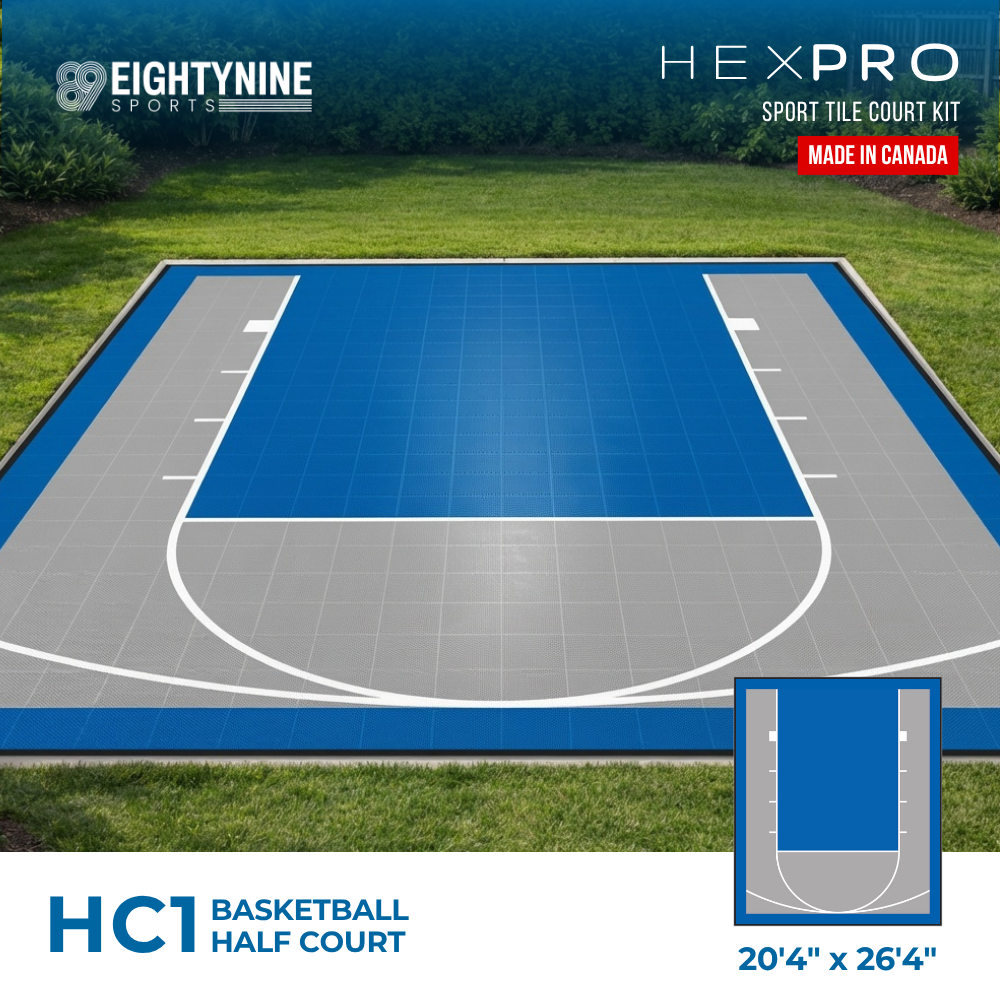
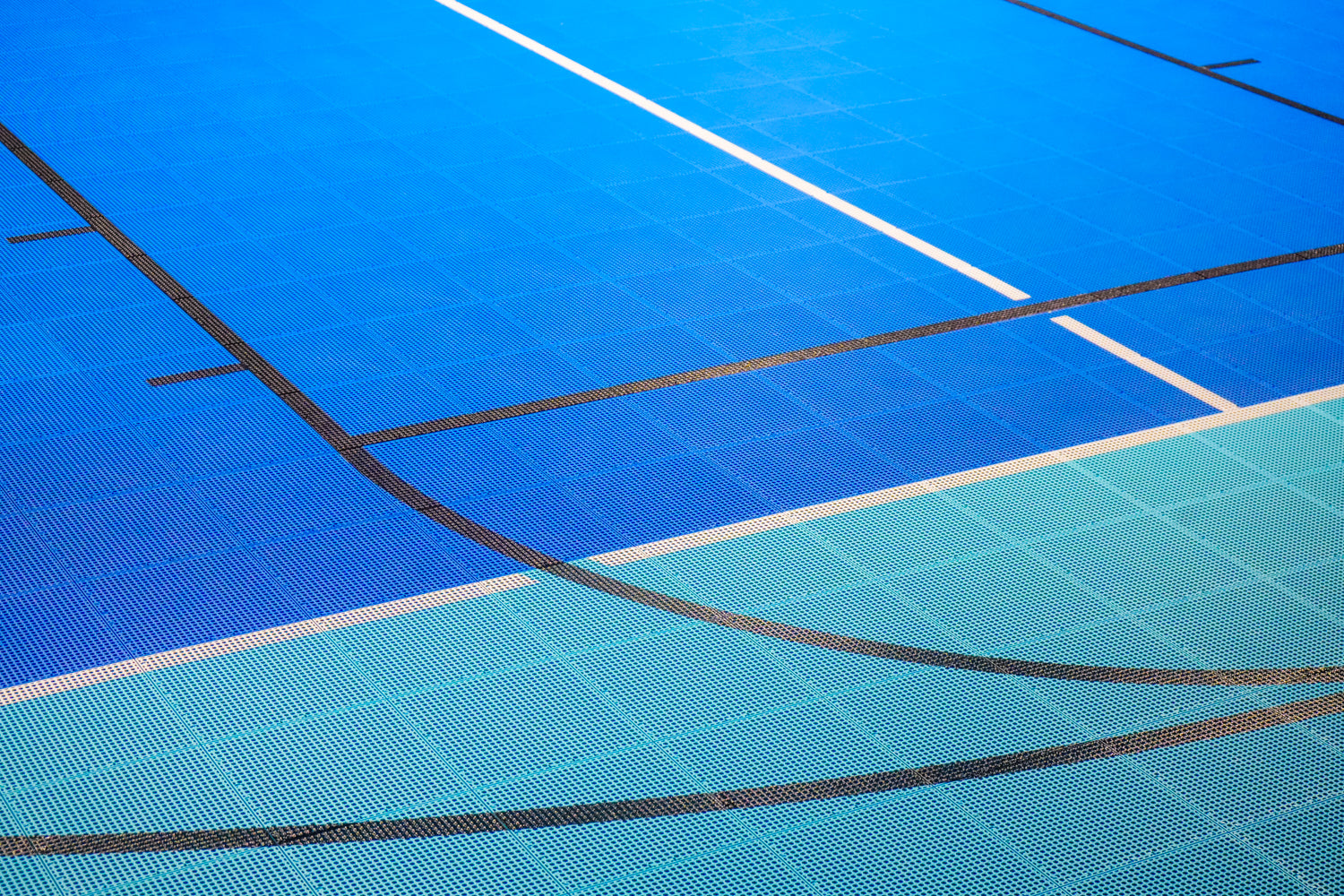
Modular Sport Tile (HEXPRO)
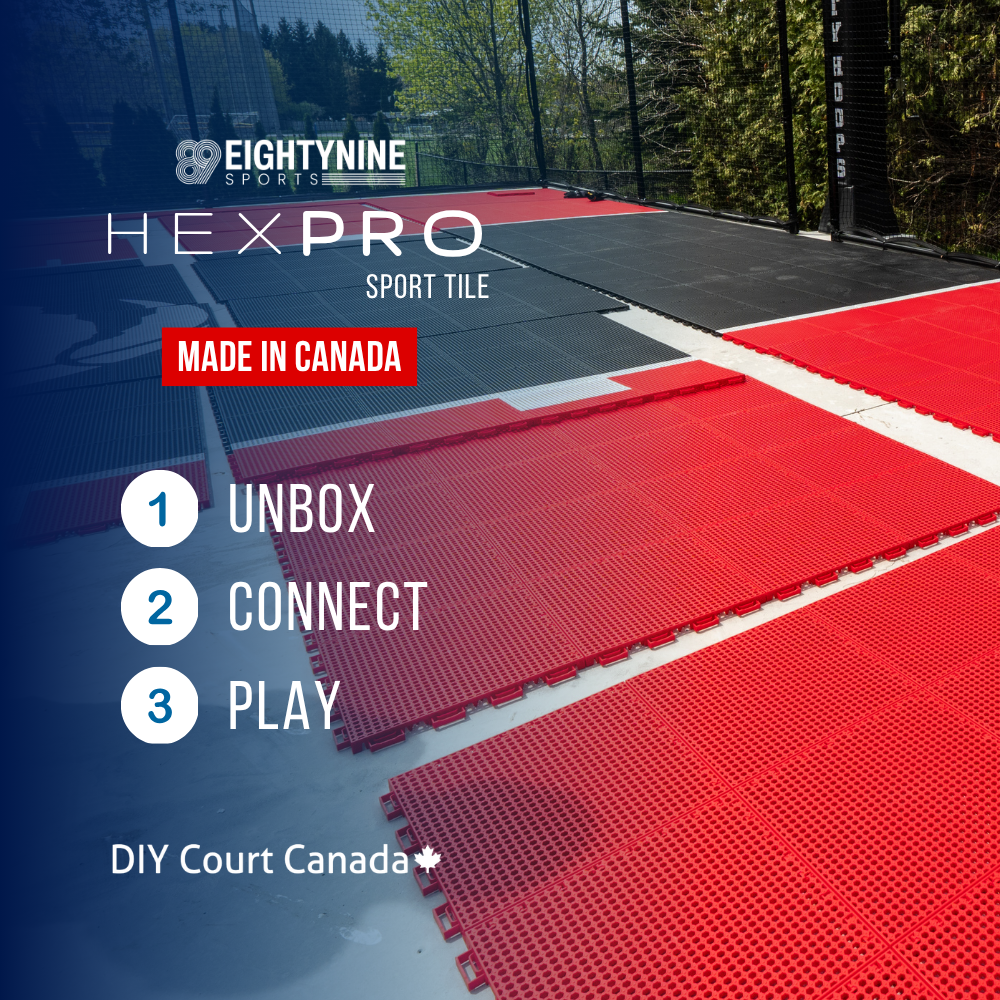
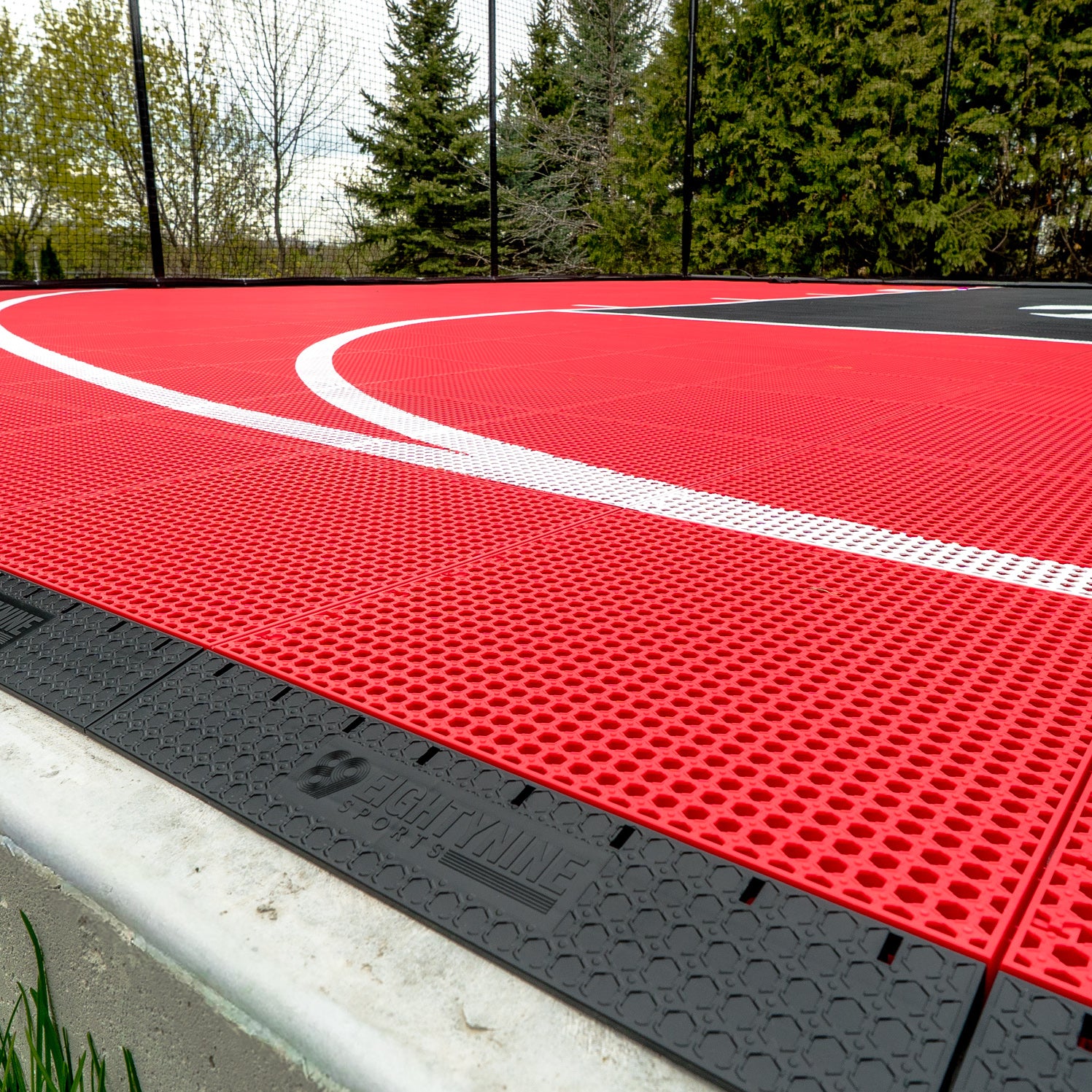
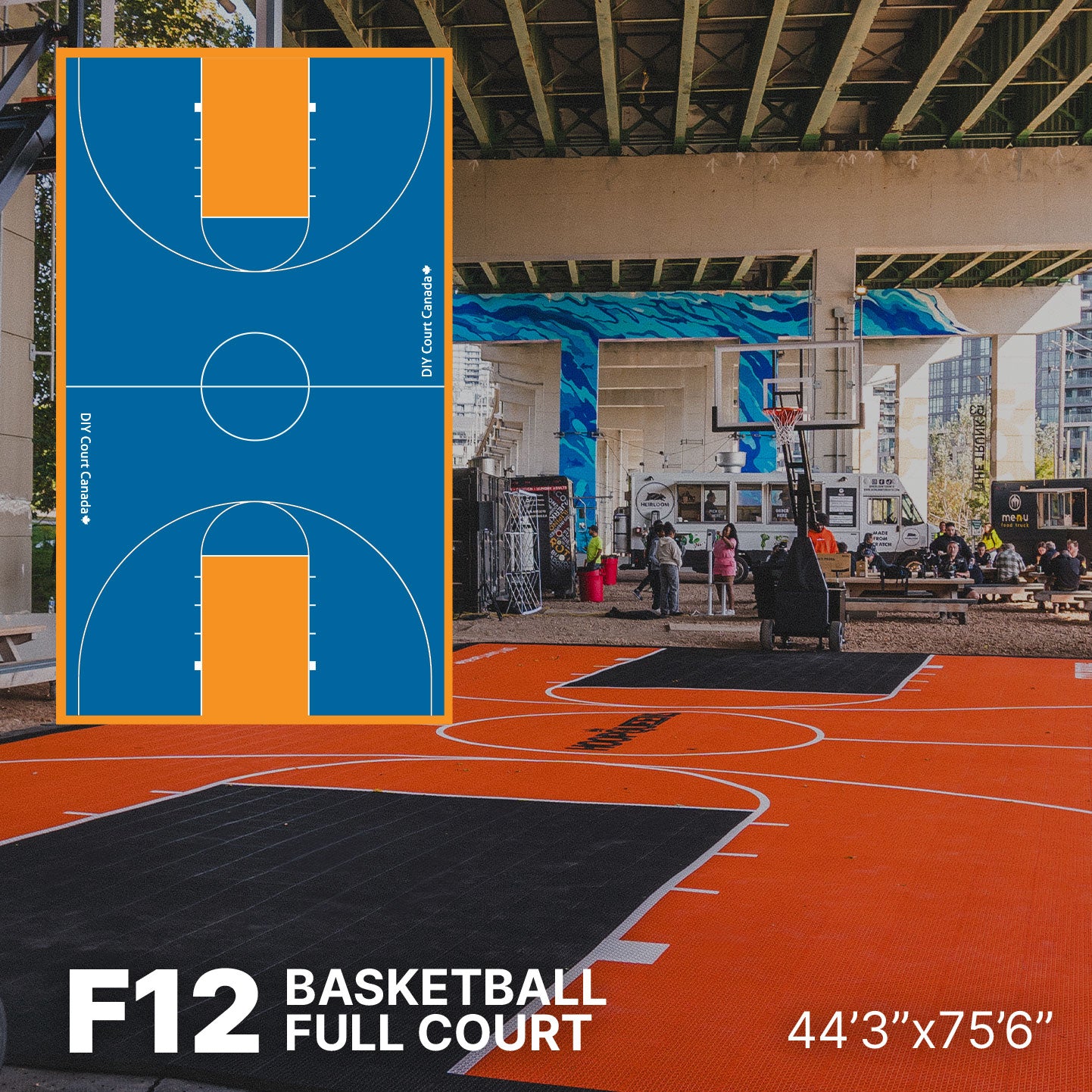
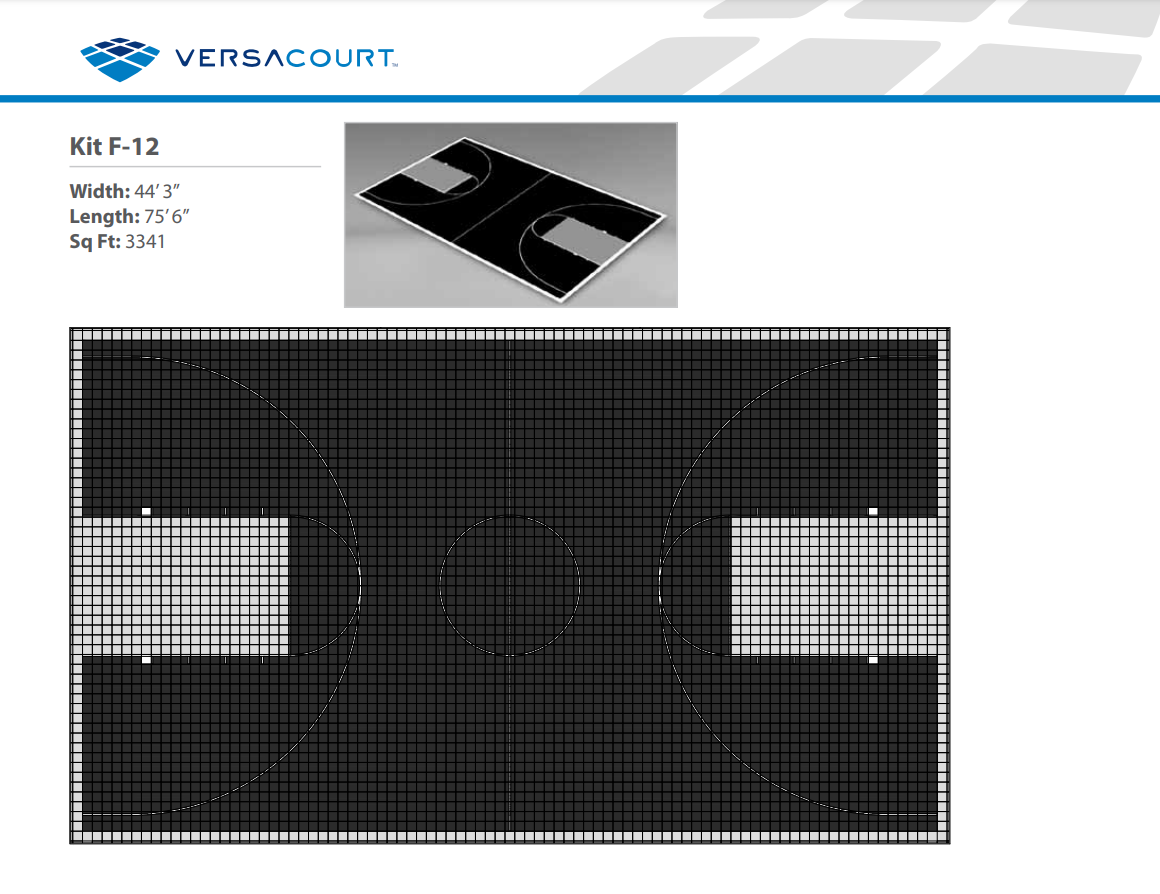
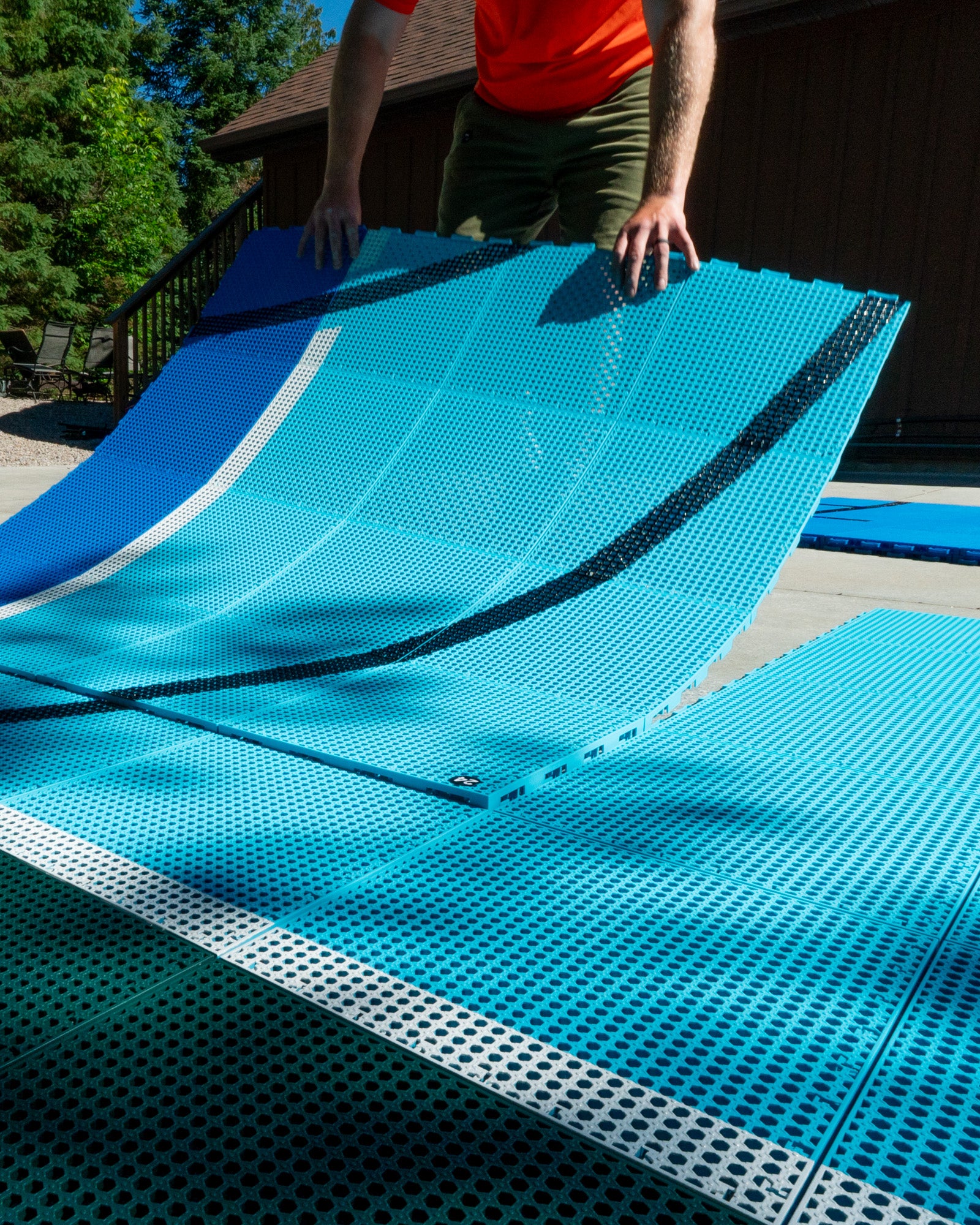
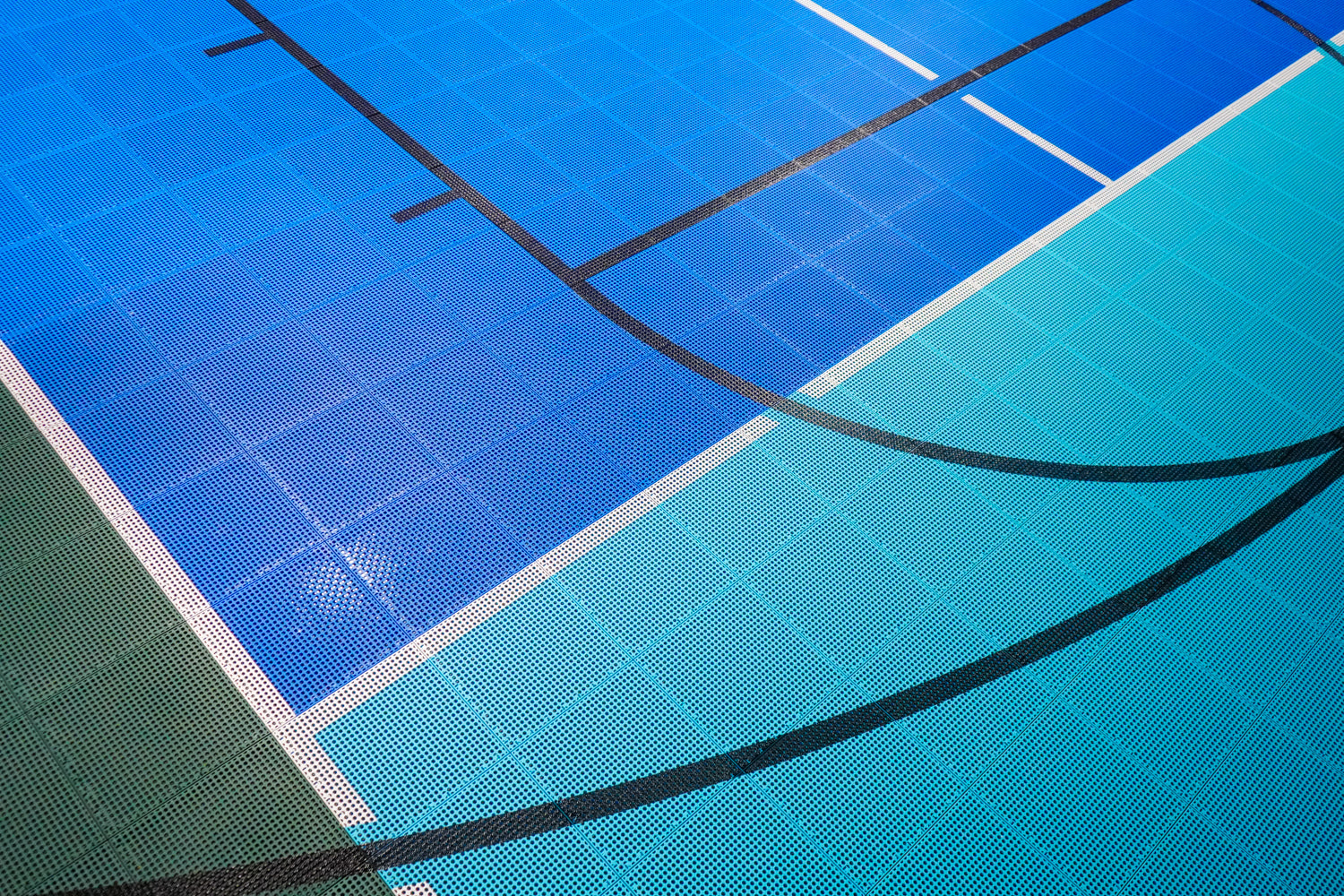
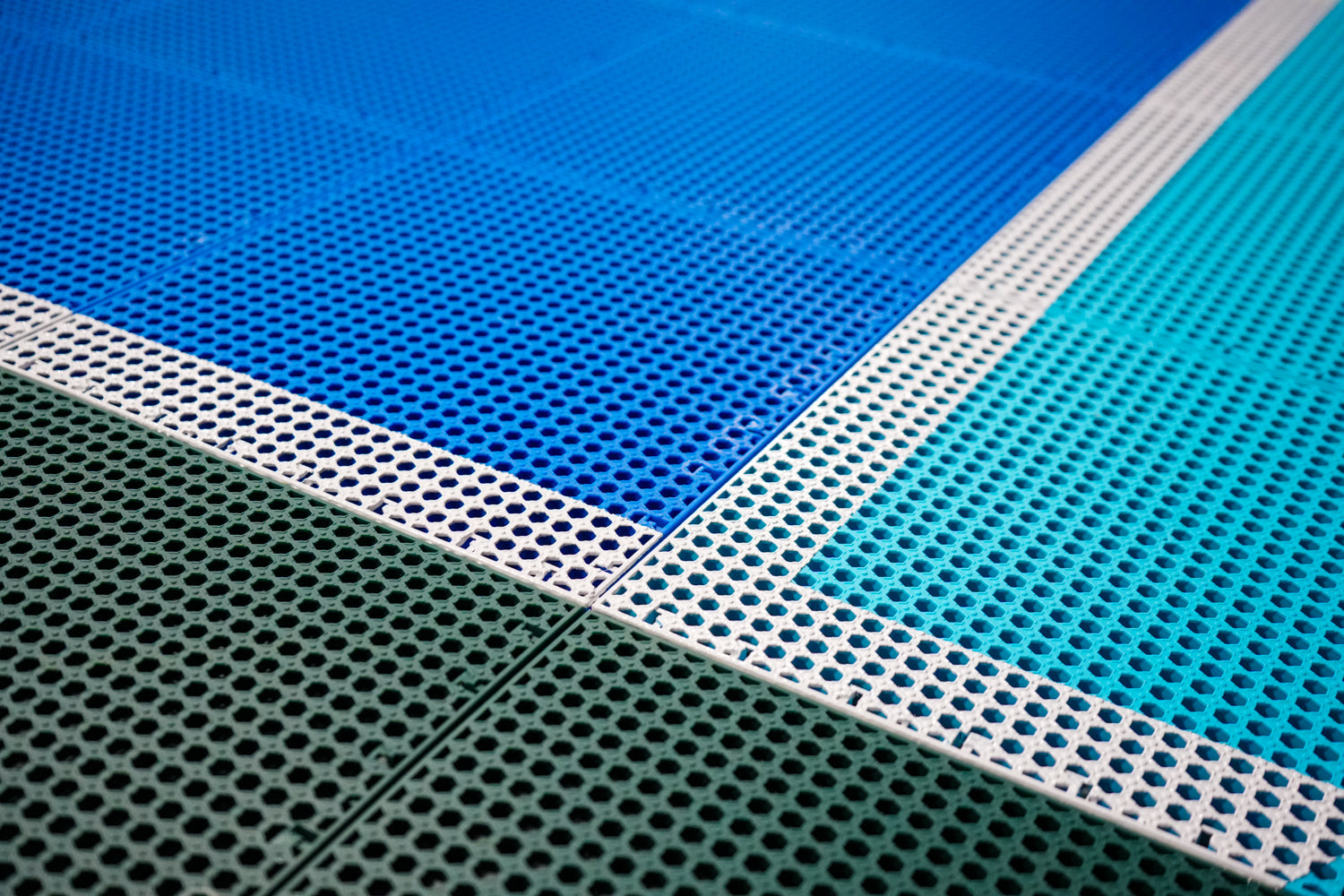
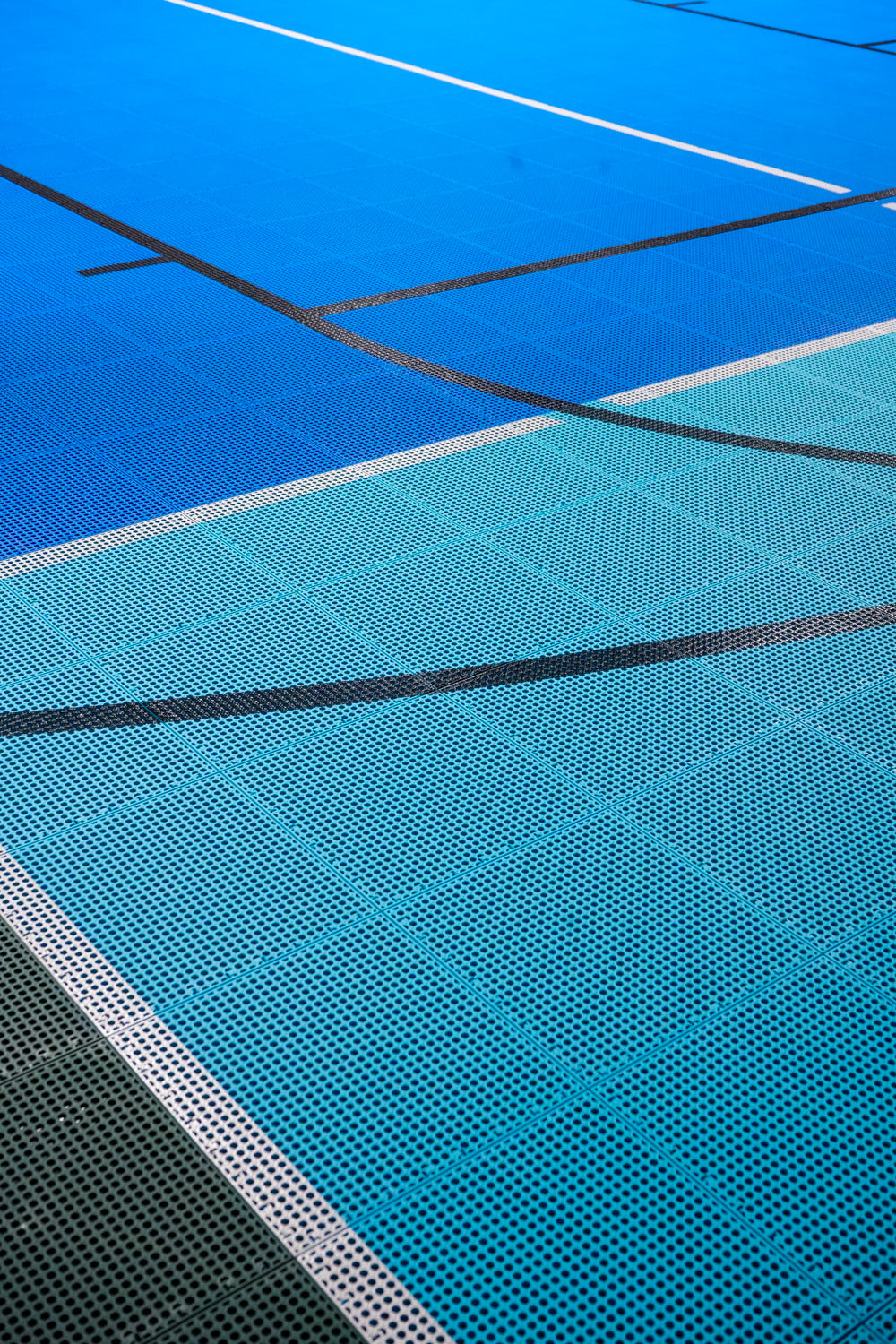
Modular sport tiles are an interlocking tile system installed directly over an existing hard surface or an alternative foundation like base panels.
Benefits of Modular Sport Tile
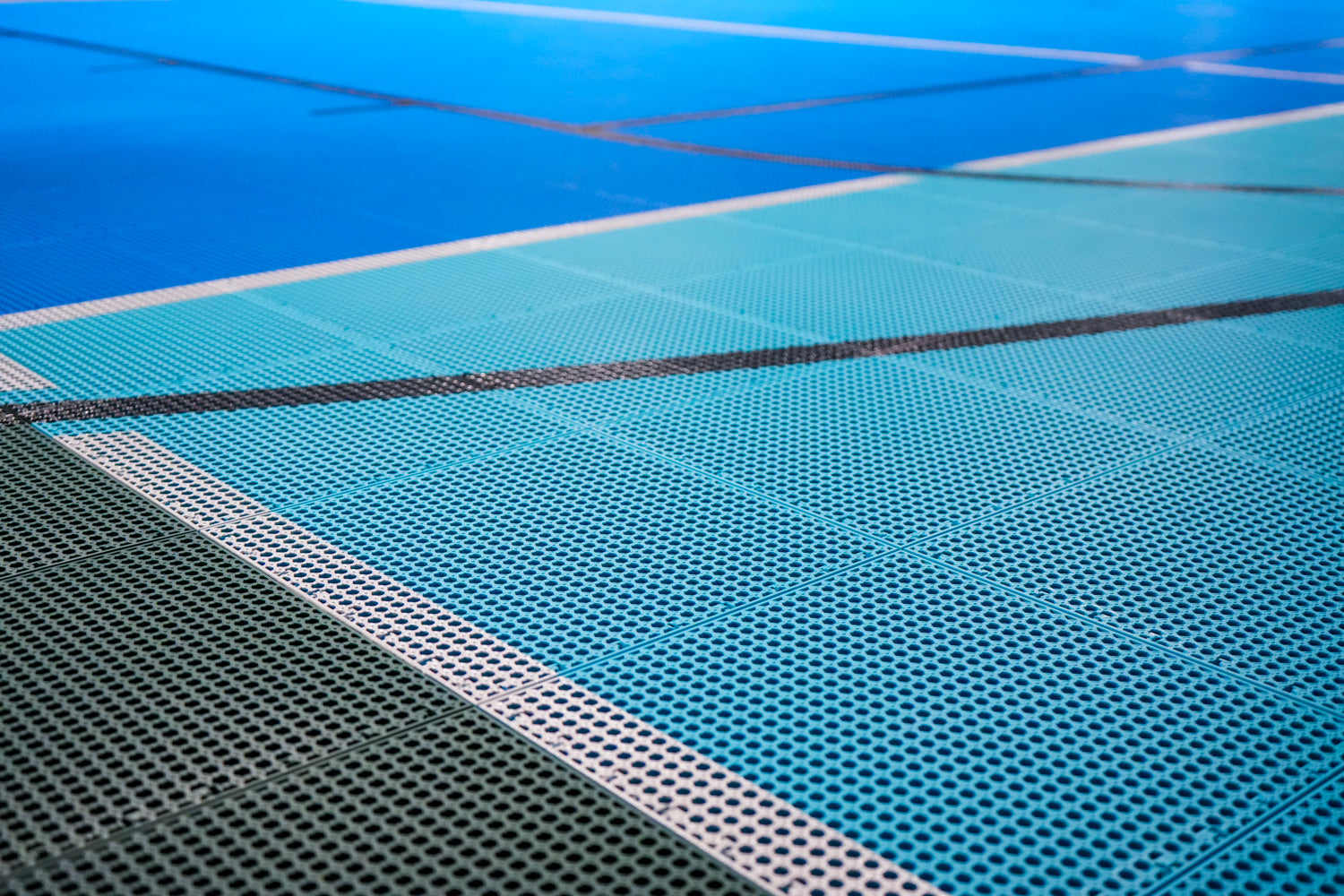
- Open-grid design promotes drainage, reducing downtime after rain or snowmelt
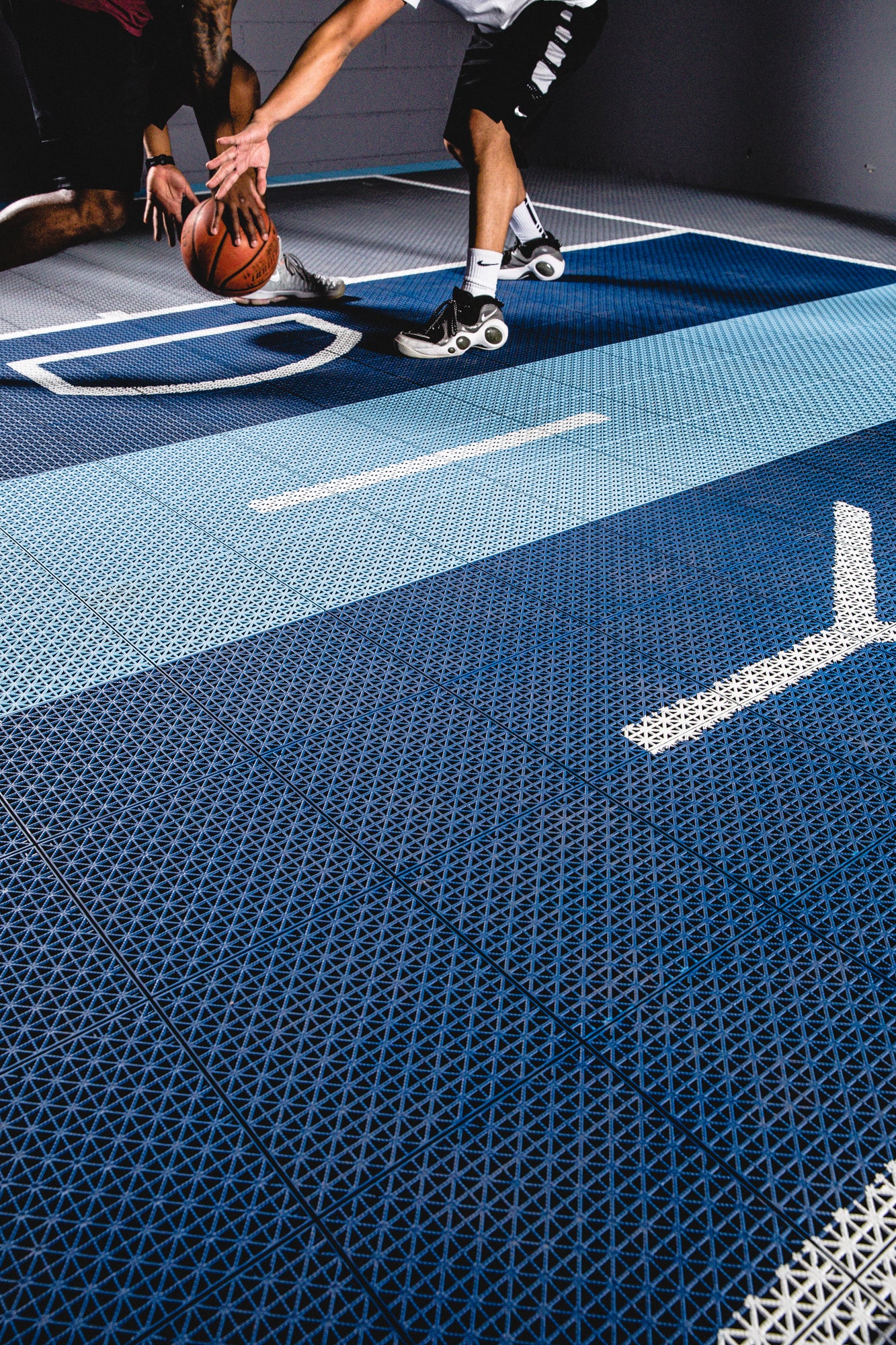
- Shock-absorbing structure that's easier on joints than concrete or asphalt
- Resists cracking through freeze-thaw cycles far better than poured surfaces
- Straightforward DIY installation for most homeowners
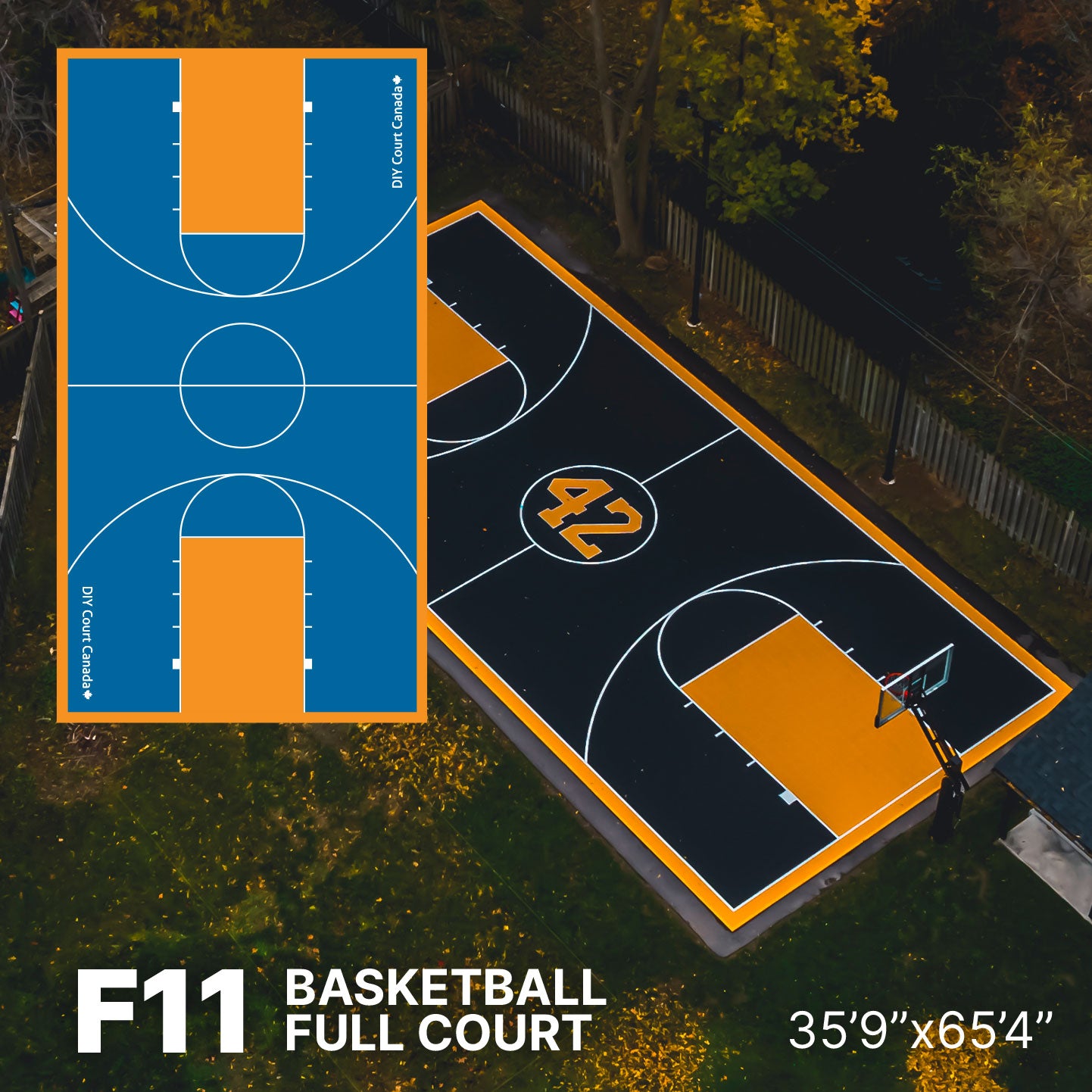
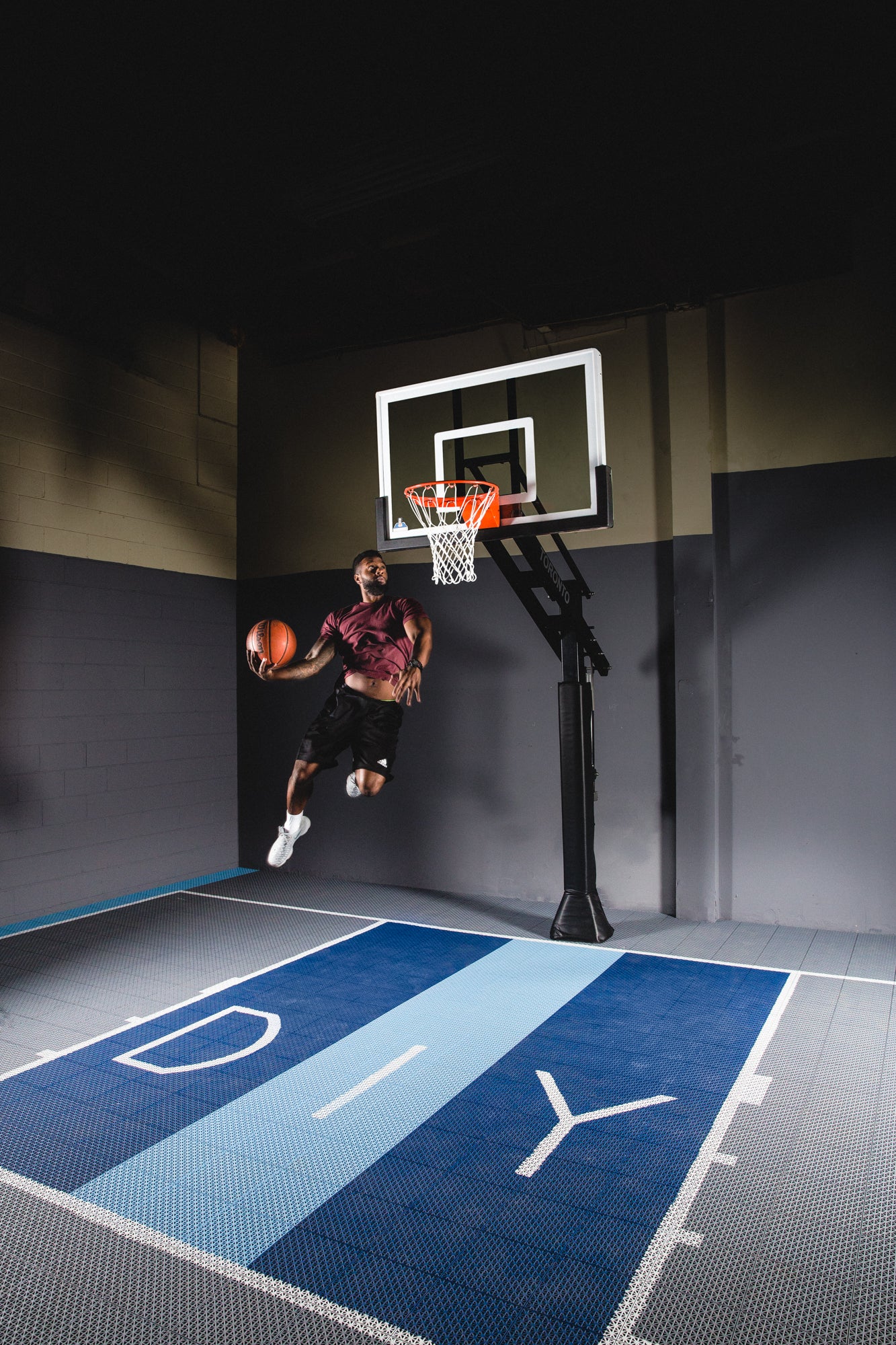
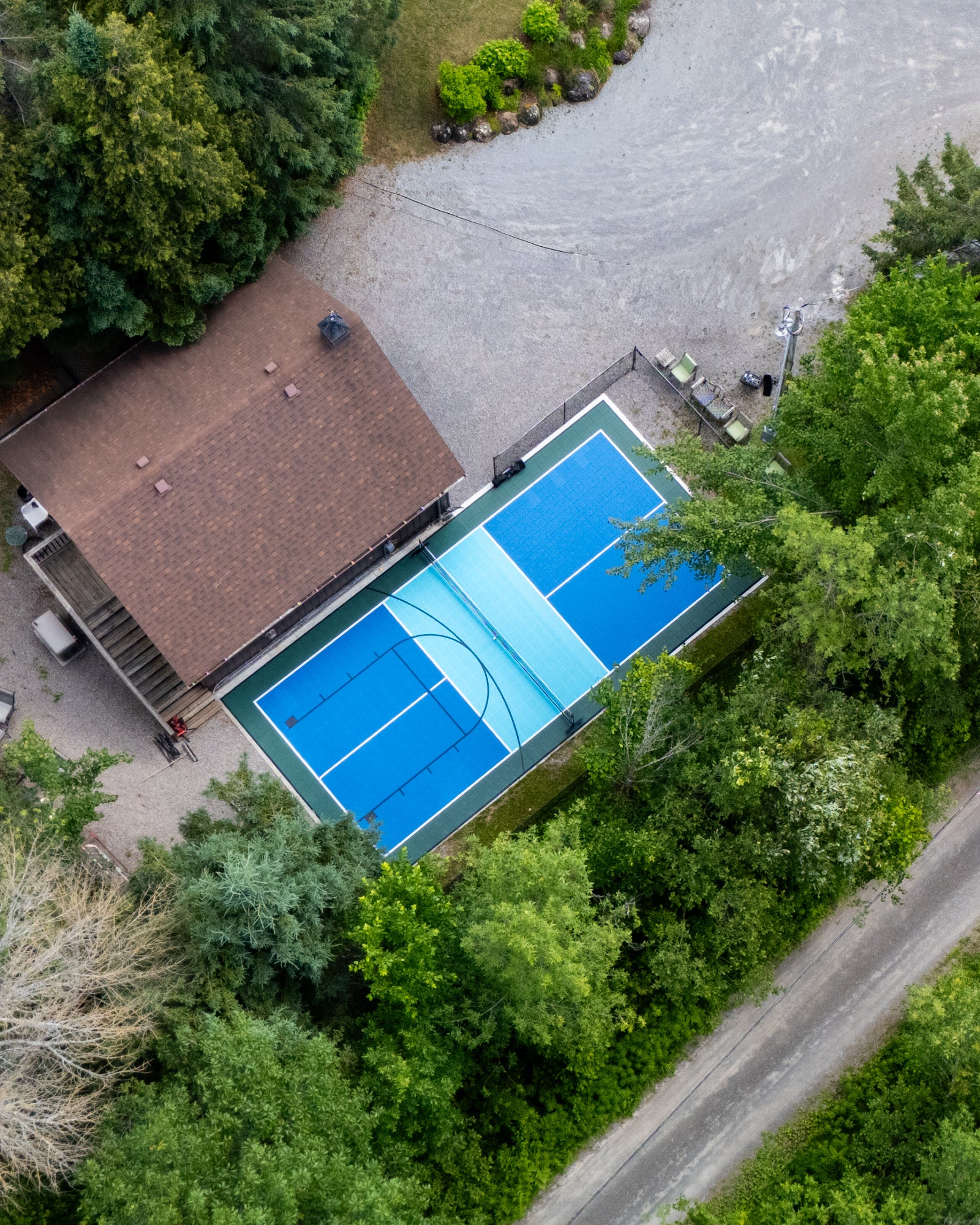
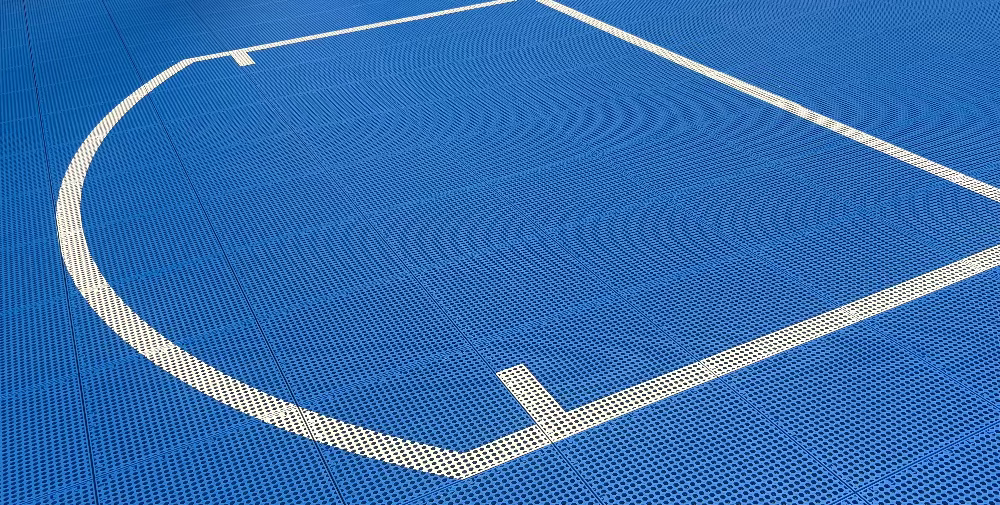
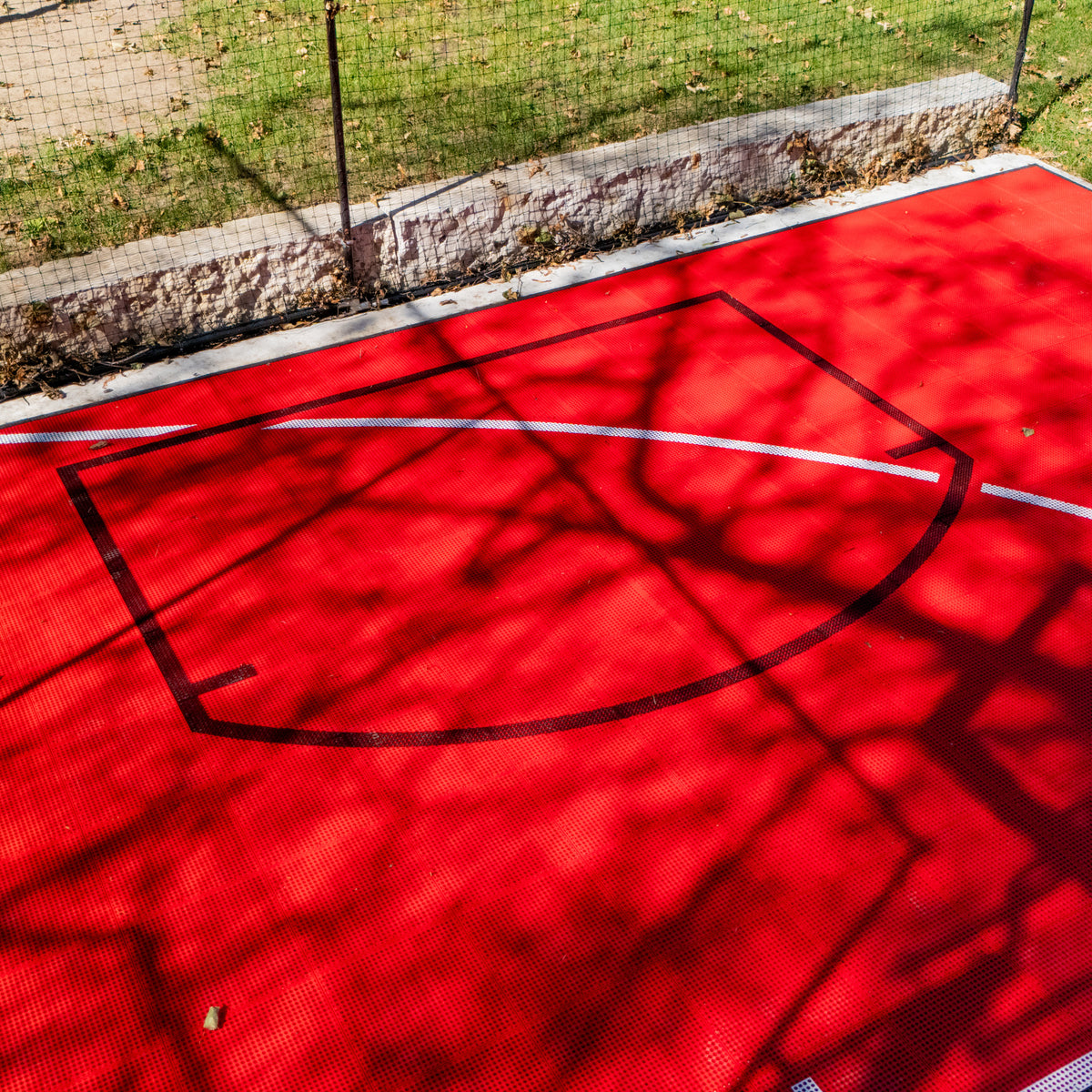
- Available in a range of colours and custom court designs
Unlike concrete, asphalt, or acrylic coatings, which all rely on a properly graded 1% slope to shed water off the surface, modular sport tile's open-grid structure lets water pass directly through the tile itself and into the base below. This makes it far more forgiving on sites that aren't perfectly sloped, and significantly reduces the puddling that can affect poured or coated surfaces after rain.
For homeowners building a new backyard court, especially in a climate with real winters, modular sport tile generally offers the best combination of comfort, durability, and zero to low long-term maintenance.

Which Surface Is Right for You?
The right choice comes down to your priorities.
If budget is the primary concern and you already have a solid existing base, asphalt or concrete may be the most affordable starting point. If you want a smooth, tournament-style look and are willing to invest in proper reinforcement, acrylic coating is a strong option. And if you're building a new court and want the best long-term balance of comfort, durability, and low maintenance, especially through Canadian winters, modular sport tile is generally the strongest all-around choice.
Built for Year Round Play
Whatever surface you're considering, freeze-thaw cycles are one of the biggest long-term threats to any outdoor court in Canada. Modular sport tile's open-grid structure and flexible design make it particularly well suited to handling these seasonal swings without the cracking that affects poured and coated surfaces over time.
Frequently Asked Questions
What is the most durable surface for an outdoor basketball court? Modular sport tiles like HEXPRO tend to hold up best long-term in climates with significant freeze-thaw cycles, since it resists cracking better than poured concrete, asphalt, or acrylic coatings.
Is modular sport tile more expensive than concrete or asphalt? It depends on the project, but modular tile often has lower long-term costs since it typically doesn't require resurfacing or crack repair the way poured surfaces do.
Can I install an outdoor basketball surface myself? Yes, in many cases. Modular sport tile systems are generally designed for straightforward DIY installation, while acrylic coating and poured surfaces typically require professional installation.
Ready to Choose the Right Surface for Your Court?
Whether you're planning a new backyard court or resurfacing an existing one, DIY Court Canada can help you choose the right surface for your space, budget, and climate.
Contact our team today to find the best outdoor basketball court surface for your project.









Share:
Why Do the White Lines on My Court Keep Cracking?
Can You Play Pickleball on Modular Sport Tile?